 X
X
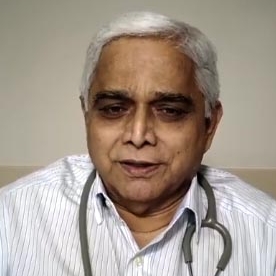
DR ARUN HALANKAR
Nephrologist
- Fees: INR 1,500
-
Wednesday 12:00 PM - 1:00 PM
(See all timing)Wednesday 12:00 PM - 1:00 PM
Introduction
Dr. Arun Halankar is a Nephrologist/Renal Specialist in Dadar West, Mumbai and has an more than 44 years of experience in this field. Dr Arun Halankar has completed MBBS from King Edward Memorial Hospital and Seth Gordhandas Sunderdas Medical College in 1968,MD - General Medicine from King Edward Memorial Hospital and Seth Gordhandas Sunderdas Medical College in 1972 and Fellowship in Nephrology from Jewish Hospital and Medical Centre of Brooklyn in 1974
Hospital Associations
Jaslok Hospital and Research Centre
Services/Interest
- Renal Transplant Specialist.
Experience
Dr Arun Halankar has more than 44 years of experience in renal transplantation and has fellowship for Nephrologist department
Awards and Recognitions
Publications and Orations: Hemodialysis in Acute Renal Failure experience in 83 Cases. Journal of Associates of Physicians of India 6.: 435. June 1971. Renal Findings in sickle cell anemia. 1st National Symposium on Sickle cell disease at Washington D.C. USA June 1974. Hypertension and Kidney. National Seminar on Hypertension. Sir H. N. Hospital . June 1974. Prevention of Hepatitis in the Dialysis Unit National Seminar on Hepatitis. Sir H. N. Hospital . March 1977. Nutrition in Renal disease National Seminar on Nutrition Sir H.N. Hospital . March 1977. Etiopathology of Chronic Renal Failure Seminar on current concepts in the diagnosis and management of chronic renal failure and future trends. Asso. of Physicians of India, Mumbai, 1976. Experience of 12 cases of Kidney Transplantation. Indian Society of Urology, Annual Conference, Agra 1980. An interesting case of Homograft use in arterial anastomosis in Kidney Transplantation. Indian Socity of Urology, Annual Conference, Agra 1980."
Education
Senior Fellowship in Nephrology Jewish Hospital and Medical Centre of Brooklyn, Downstate University, Brooklyn, New York, U.S.A.October 1972 to July 1974. MBBS, MD - General Medicine, Fellowship in Nephrology
I Speak
English,Hindi
Feedback For Dr Arun Halankar
Write FeedbackJaslok Hospital And Research Centre Timing
Wednesday
12:00 PM - 1:00 PM
Online Consultations
Monday
12:00 PM - 6:00 PM
Tuesday
12:00 PM - 2:00 PM,2:00 PM - 7:00 PM
Wednesday
12:00 PM - 2:00 PM
Thursday
12:00 PM - 5:00 PM
Friday
12:00 PM - 2:00 PM,2:00 PM - 7:00 PM
Saturday
12:00 PM - 2:00 PM
Who is a nephrologist?
Nephrology is the medical specialty which is concerned with the treatment of kidney conditions and abnormalities, and a physician who practices this specialty of nephrology is called a nephrologist. Nephrology being the subspecialty of internal medicine, a nephrologist needs to complete the same training as an internist and then gain an additional fellowship in nephrology. Nephrologists are responsible for diagnosing causes and levels of kidney failure and prescribing appropriate treatment such as medication, diet changes, or dialysis.
When should I see a nephrologist?
Nephrologists are physicians who deal with diagnosis and treatment of diseases of the kidneys.
You should see a nephrologist when you start experiencing pain around your abdomen that usually radiates to your sides and lower back. Or when you suffer from a reduced amount of urine, swelling of your legs, ankles, and feet, unexplained shortness of breath, excessive drowsiness or fatigue, persistent nausea, confusion, pain, or from pressure in your chest.
What diseases does a nephrologist treat?
Nephrologists can treat the following conditions:
- Blood or protein in the urine
- Chronic kidney disease
- Renal artery stenosis
- Nephrotic syndrome
- Polycystic kidney disease
- Hemolytic uremic syndrome
- Kidney stones, although a urologist may also treat this
- KKidney infections
- kidney swelling due to glomerulonephritis or interstitial nephritis
- Kidney cancer
- End-stage kidney disease
- Kidney failure, both acute and chronic
What kind of tests do nephrologists perform?
Nephrologists treat the diseases of the kidneys. But before they can treat them, the nephrologists need to diagnose them, and they do that by performing several tests. They are as follows:
- Physical examination
Since our kidneys are responsible for maintaining fluid balance and filtering out the excess fluids and waste from the blood, damage to the kidneys leads to fluid accumulation and overload which causes edema or swelling of the legs and face, and long term kidney diseases also lead to symptoms of high blood pressure and anemia. So, a physical examination is carried out by the doctor to diagnose edema or high blood pressure.
- Blood tests
Blood tests are performed to reveal altered levels of urea, creatinine, and electrolytes including sodium, magnesium, potassium, calcium, phosphates, nitrogen etc.
A nephrologist may also perform a blood test for various organisms that may damage the kidneys including hepatitis C, hepatitis B, AIDS etc.
- Urine analysis
Nephrologists also perform urine analysis that may help them diagnose kidney damage by revealing excess proteins that are being excreted from the body in the urine. They also use microscopic analysis of urine to detect kidney and urinary tract infection.
- Imaging Studies.
They can also put imaging studies like Ultrasound scan, CT Scan, or MR angiography to work to detect kidney diseases.
Other tests performed by the nephrologists are Renal Biopsy, Intravenous Urography (IVU), Scintigraphy, and Renal Arteriography.
What happens in your first nephrologist's appointment?
Usually, before your appointment, you are asked to bring information on:
- A list of symptoms you are facing and how long you have been facing them.
- A list of all of your current doctors with their contact information.
- A list of medications you are taking or were asked to take.
- Your medical history.
- Family History.
- A surgery list, if any.
During their first visit, the patients usually go through:
- A history of your current problem.
- Complete physical examination.
- Comprehensive evaluation.
- Previous treatments and complications.
In some cases, additional tests are also performed:
- Urinalysis
- Imaging studies.
- Blood testing
One done with your first round of visit, your nephrologist will suggest a diagnosis, treatment plan, and follow-up visits.
What's the difference between a nephrologist and urologist?
When it comes to the difference between nephrology and urology, the former deals with only kidneys while the latter provides treatment for a condition relating to the bladder, urethra, ureters, kidneys, and adrenal glands. Urologists also cover male issues relating to the prostate and penis.
Can a nephrologist perform surgery like a kidney transplant?
The nephrologists do not perform surgery. The surgeries like a kidney transplant are performed by transplant surgeons.